
Sleep better, naturally.
If you are lying awake and wondering how to get sleep at night with at-home remedies, this guide is for you. You will learn how to time simple habits, exercise, and foods so your biology works with you instead of against you.
Key takeaways
- How to get sleep at night with at-home remedies depends more on timing and habits than on supplements.
- Exercise and specific evening foods can improve sleep onset when aligned with your circadian rhythm.
- Wearables support behavior change, but tracking alone does not fix sleep.
How to get sleep at night with at-home remedies when you feel tired but wired
You can drink chamomile tea, take magnesium, dim the lights, and still feel wide awake at 11:15pm.
That does not mean at-home remedies failed. It usually means they were used in the wrong order, at the wrong dose, or in the wrong biological window.
Sleep is not one switch. It is a handoff between systems. Your circadian clock must be aligned. Arousal must come down. Core body temperature needs to drop. Sleep pressure has to be high enough to carry you through the first part of the night.
Many high performers struggle with how to get sleep at night with at-home remedies because they treat remedies like a list. Sleep responds better to a sequence.
Sleep is also the foundation of cognitive performance, metabolic health, mood stability, fitness adaptation, creativity, and long-term brain health. When sleep improves, everything else often gets easier.
The physiology behind how to get sleep at night with at-home remedies
Before we talk about tools, we need the mechanism.
Sleep pressure builds across the day as adenosine accumulates. Caffeine blocks adenosine receptors, which is why it masks sleepiness rather than replacing sleep (Fredholm et al., 1999).
Circadian timing is your internal clock. Evening light can delay melatonin release and shift sleep later (Zeitzer et al., 2000).
Arousal level reflects your nervous system state. You can feel exhausted and still have elevated sympathetic activation.
Core body temperature naturally drops as you fall asleep. Passive body heating 1 to 2 hours before bed can improve sleep onset by accelerating this drop (Haghayegh et al., 2019).
The key insight is simple. How to get sleep at night with at-home remedies is less about finding the perfect supplement and more about placing the right habit into the right window.
The myth about how to get sleep at night with at-home remedies
A common belief says that if a remedy is natural, timing does not matter.
Take magnesium. Drink tea. Add melatonin. Hope it works.
Biology does not work that way. Most at-home remedies influence one part of sleep physiology, not the entire chain. Melatonin is primarily a timing signal, not a sedative for most people. Magnesium may help some adults with insomnia symptoms, but evidence is mixed and effects are modest in many studies (Abbasi et al., 2012).
If your issue is high arousal, a small shift in melatonin will not feel dramatic. If your issue is circadian delay, tea will not reset your clock.
Habits, not willpower, determine sleep quality. Stacking remedies without changing behavior often wastes effort.
How exercise changes how to get sleep at night with at-home remedies
Exercise is one of the most underused at-home sleep tools.
Regular physical activity is associated with improved sleep quality and shorter sleep onset latency (Kredlow et al., 2015). Exercise increases sleep pressure and can stabilize circadian rhythms.
Timing matters. Morning or afternoon exercise often supports earlier sleep onset. Intense exercise very close to bedtime can raise core temperature and arousal in some people. That does not mean evening workouts are bad. It means you may need a longer cool-down window.
An uncomfortable but high-leverage habit is this: train consistently, even when you slept poorly. Gentle movement the next day, plus morning light, helps anchor your clock and rebuild sleep drive for the following night.
How to get sleep at night with at-home remedies through food timing
Food is not a sedative. Still, specific patterns can support sleep onset.
A very heavy late meal may fragment sleep. Going to bed hungry can also increase wakefulness.
Some evidence suggests that carbohydrate intake in the evening can shorten sleep onset latency, possibly by influencing tryptophan transport and serotonin pathways, though findings vary (Afaghi et al., 2007). Small amounts of kiwi have been associated with improved sleep onset and duration in limited studies, but data are preliminary.
Tart cherry juice may modestly increase sleep time in some adults, potentially through melatonin and anti-inflammatory pathways, yet effects are not universal.
Use food as part of a routine. Finish dinner 2 to 3 hours before bed when possible. Aim for satisfied, not stuffed. Treat specific foods as experiments, not cures.
How to get sleep at night with at-home remedies: the 3-hour runway
If you want to be asleep at 11:30pm, begin at 8:30pm.
Three hours before bed
- Set a caffeine cutoff that fits your sensitivity. Ten hours is a useful trial window.
- Limit alcohol. It may reduce sleep latency but fragments sleep later in the night (Ebrahim et al., 2013).
- Finish heavy meals.
Two hours before bed
- Dim lights to support melatonin timing.
- Shift to low-stimulation activities.
- Herbal tea can mark the transition. Think ritual, not sedation.
Ninety minutes before bed
- Take a warm shower or bath to support the temperature drop.
- Keep the bedroom cool and dark.
Sixty minutes before bed
- Read something emotionally neutral.
- Practice slow breathing with longer exhales.
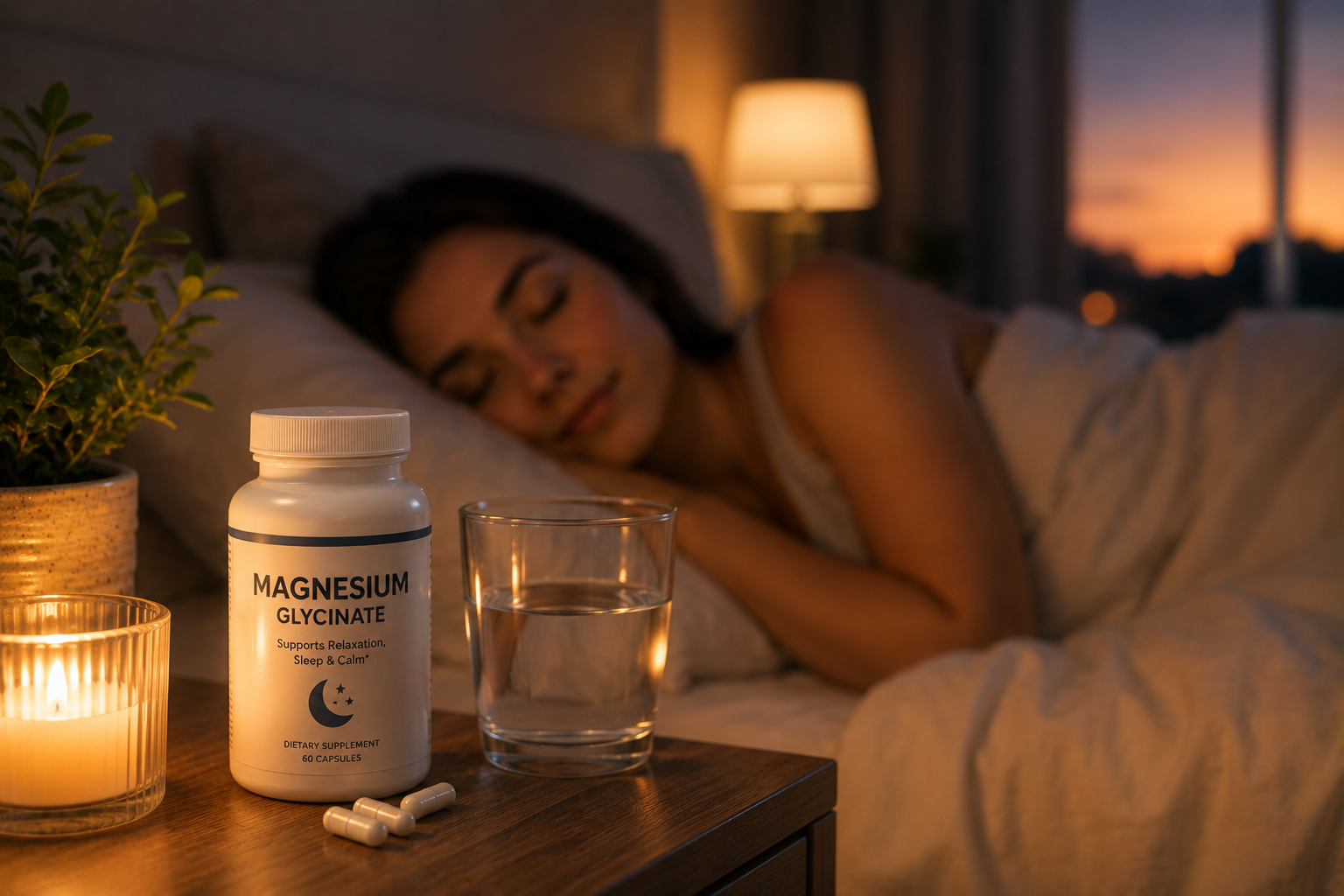
- If magnesium helps you, use a consistent dose at a consistent time.
Thirty minutes before bed
- No new inputs. No work decisions. No intense conversations.
This sequence works because it aligns with biology. It becomes powerful when repeated. Tracking alone does not drive results. Behavior change does.
How to get sleep at night with at-home remedies without misusing wearables
Oura, WHOOP, Apple Watch, and Fitbit can estimate sleep timing and continuity with reasonable accuracy. They are less accurate for sleep stages compared with laboratory polysomnography (de Zambotti et al., 2019).
Wearables cannot diagnose insomnia or sleep apnea.
Use data as a behavior loop. If sleep onset is long, test earlier light dimming or exercise timing. If awakenings increase, review alcohol, late meals, or room temperature.
A low score is not a verdict. It is feedback. Habits move the needle.
What not to do when trying how to get sleep at night with at-home remedies
Do not stay in bed awake and frustrated for long stretches. Get up briefly in low light and return when sleepy. This principle comes from CBT-I, the first-line treatment for chronic insomnia (Trauer et al., 2015).
Avoid stacking new supplements every 20 minutes. That pattern increases performance anxiety around sleep.
Stop doing sleep math. Clock-watching increases cognitive arousal.
If you snore loudly, have witnessed breathing pauses, or feel excessive daytime sleepiness, seek medical evaluation. Obstructive sleep apnea requires proper assessment (CDC, 2024).
The uncomfortable habit that stabilizes how to get sleep at night with at-home remedies
Keep the same wake time, even after a rough night.
Sleeping in feels logical. It can weaken sleep drive and shift circadian timing. Consistent wake times strengthen rhythm stability and improve sleep across the week.
Get outdoor light within the first hour of waking when possible. Light anchors the clock. Gentle movement helps too.
This habit is simple. It is not easy. It is one of the highest-leverage behaviors in sleep medicine.
A simple checklist for how to get sleep at night with at-home remedies
- Exercise most days, ideally earlier in the day
- Finish dinner 2 to 3 hours before bed
- Dim lights 2 hours before sleep
- Warm shower or bath 60 to 90 minutes before bed
- Ten minutes of calm reading and slow breathing
- Consistent wake time with morning light
Progress beats perfection. When your evening reliably shifts from output to recovery, sleep becomes less of a fight.
If you want structured support, you can explore a personalized plan with a board-certified sleep professional at Clementine. The goal is not perfect data. The goal is durable habits that restore your nights.
Frequently asked questions
Start with timing. Dim lights two hours before bed, take a warm shower 60 to 90 minutes before sleep, and practice slow breathing. These steps lower arousal and support the natural drop in core body temperature that helps you fall asleep.
Yes. Regular exercise increases sleep pressure and supports circadian stability. Morning or afternoon sessions tend to help most, while very intense late-night workouts may require a longer cool-down window.
Finishing dinner a few hours before bed is often more important than any single food. Some evidence supports moderate evening carbohydrates, kiwi, or tart cherry juice, but effects vary. Treat foods as supportive habits, not guaranteed fixes.
Consumer devices estimate sleep based on movement and heart signals. They are useful for trends but not diagnostic tools. Focus on consistent habits rather than chasing a perfect score.
GET IN TOUCH
Say goodnight to bad sleep
References
- Fredholm, B. B., et al. (1999). Actions of caffeine in the brain with special reference to factors that contribute to its widespread use. Pharmacological Reviews.
- Zeitzer, J. M., et al. (2000). Suppression of melatonin secretion by light. Journal of Clinical Endocrinology & Metabolism.
- Haghayegh, S., et al. (2019). Before-bedtime passive body heating to improve sleep. Sleep Medicine Reviews.
- Kredlow, M. A., et al. (2015). The effects of physical activity on sleep. Journal of Behavioral Medicine.
- Afaghi, A., et al. (2007). High-glycemic-index carbohydrate meals and sleep onset. American Journal of Clinical Nutrition.
- Ebrahim, I. O., et al. (2013). Alcohol and sleep I: Effects on normal sleep. Alcoholism: Clinical and Experimental Research.
- de Zambotti, M., et al. (2019). Validation of Fitbit Charge 2 compared with polysomnography. Sleep.
- Trauer, J. M., et al. (2015). Cognitive behavioral therapy for chronic insomnia. Annals of Internal Medicine.
- Centers for Disease Control and Prevention. (2024). Sleep and sleep disorders.