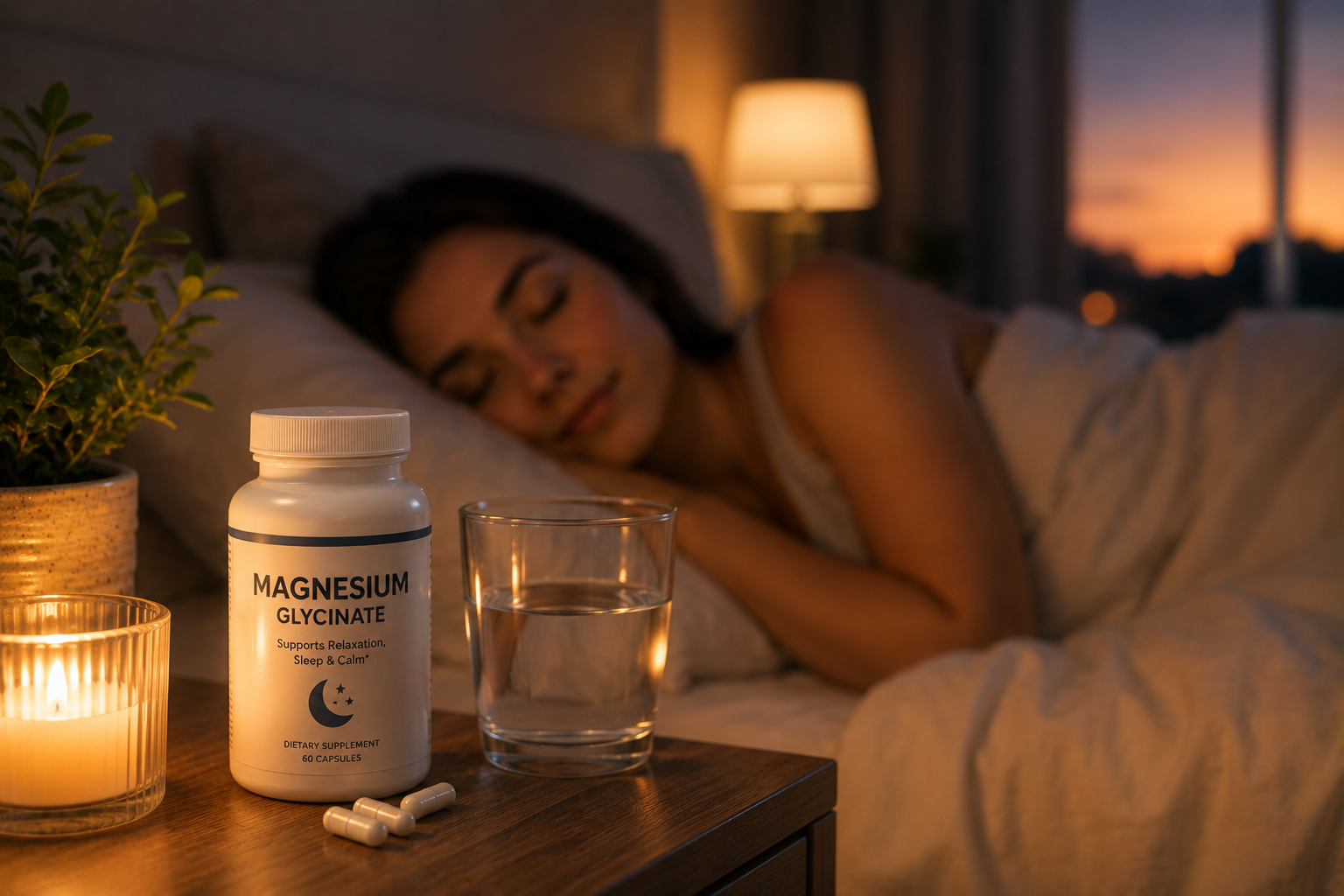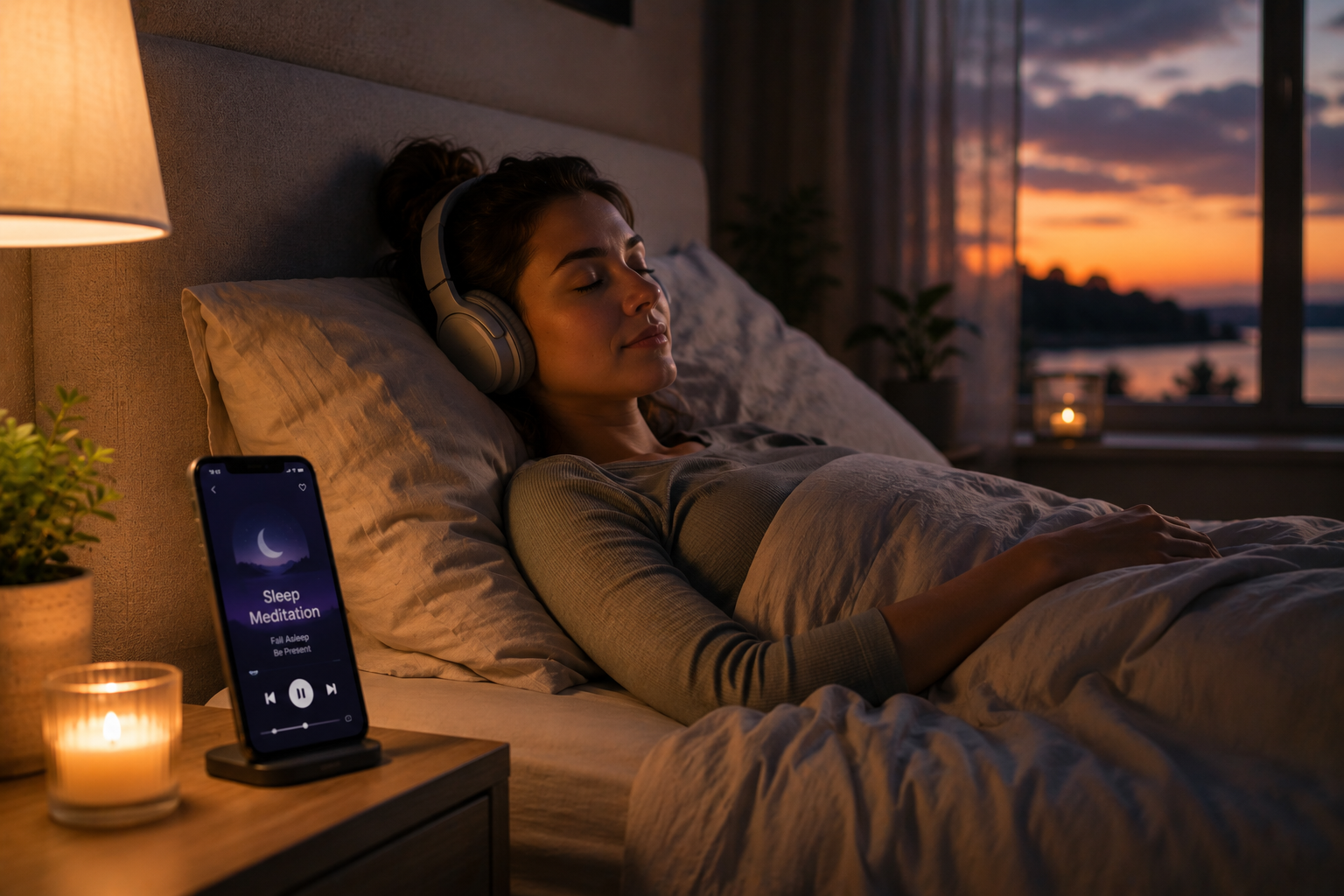

Sleep better, naturally. Starting tonight.
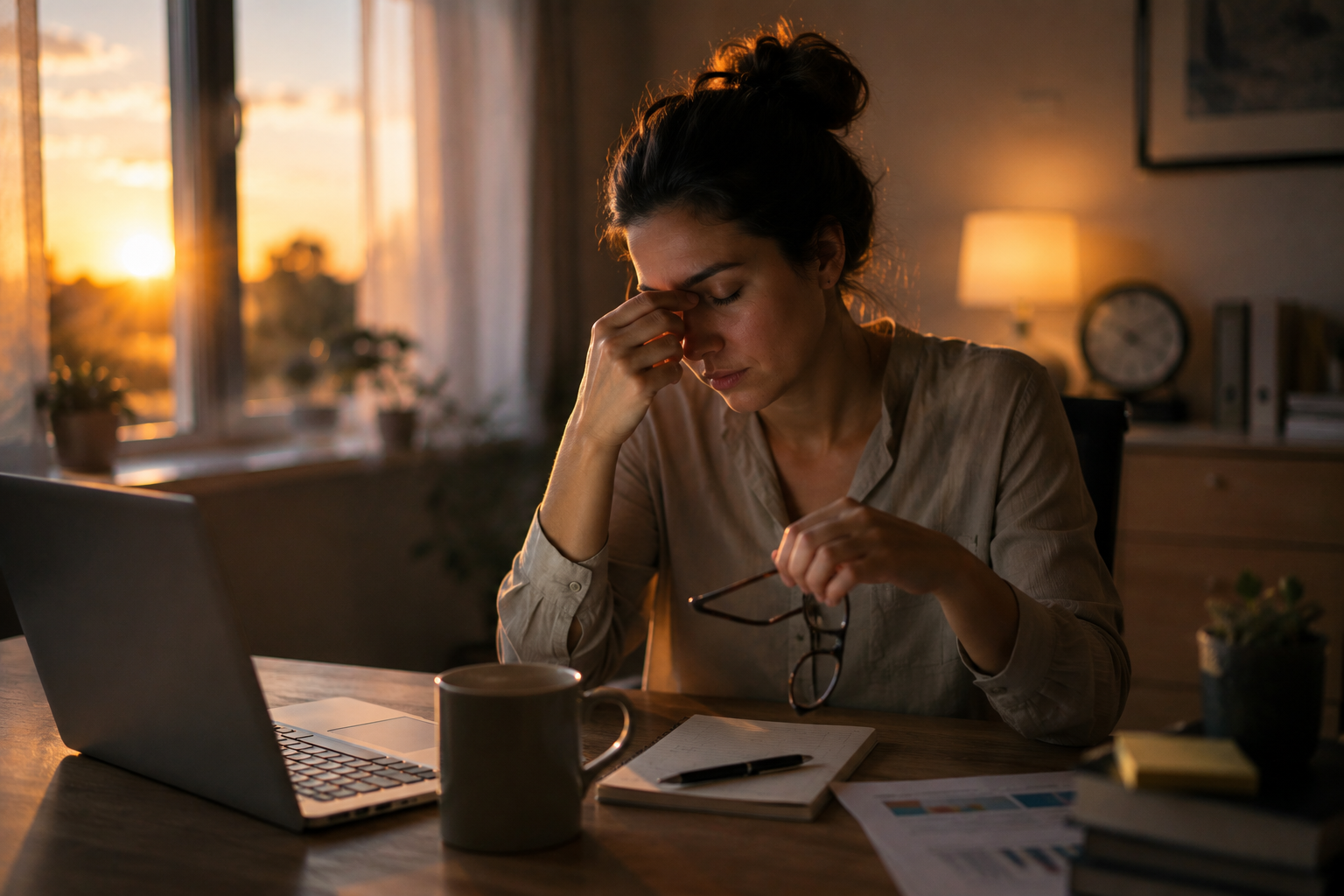
This article is for high-functioning adults who feel “off” but cannot explain why. You will learn the real signs of lack of sleep and the simple habits that restore energy, mood, and focus.
Key takeaways
- Signs of lack of sleep often look like stress, aging, or personality changes.
- Wearables show trends, but habits, not data, restore sleep.
- A fixed wake time is uncomfortable and powerful.
You are not lazy. You may be under-recovered.
At 3pm, you are not “getting older.” You are not broken.
You are staring at the same paragraph for the third time. Coffee stopped working. You feel strangely impatient in a meeting, then regret it later. By evening, sugar or salty snacks feel irresistible.
For many high performers, these are the real signs of lack of sleep. Not falling asleep at your desk. Not nodding off at red lights. Instead, a subtle shrinking of your best self that you can explain away for years.
Here is the corrective truth. You can be in bed for eight hours and still not recover. Sleep is the foundation of cognition, mood, metabolism, fitness, relationships, creativity, productivity, and long-term brain health. When it is unstable, everything else feels harder.
Common advice focuses on hacks and supplements. Real change comes from habits. Tracking alone does not improve sleep. Behavior change does.
The physiology behind signs of lack of sleep
Two biological systems shape sleep. The first is sleep pressure. Adenosine builds in the brain the longer you stay awake. The second is your circadian rhythm, which times alertness and sleepiness across 24 hours.
Caffeine blocks adenosine receptors. It masks sleep pressure but does not replace sleep. Light exposure shifts circadian timing. Late bright light can delay sleep. Early morning light strengthens it.
When sleep is shortened or fragmented, emotional regulation, attention, reaction time, and metabolic signaling shift. In controlled laboratory studies, people restricted to short sleep report only mild impairment while objective performance continues to decline over days Van Dongen et al., 2003.
This mismatch is why signs of lack of sleep get mislabeled as stress, personality, or aging.
The myth: “If I am not crashing, I am fine”
Acute sleep deprivation looks dramatic. Heavy eyelids. Clear mistakes. That pattern is real and dangerous.
More common is chronic short sleep, often defined as fewer than seven hours per night for adults. Many people continue to function. They deliver results. They just do it with more friction.
Large reviews link shorter sleep with worse cardiometabolic health over time, although causality is complex and bidirectional St-Onge et al., 2016. The science is strong on association. It is more nuanced on exact dose and individual variability.
You can adapt to feeling tired. Your brain does not fully adapt to the performance cost.
If you want a stable baseline, review this guide to the science-based best time to sleep and wake up.
Signs of lack of sleep: 11 clues high performers miss
These signs of lack of sleep are not a diagnosis. Look for patterns, especially if they improve on vacation.
1) Your fuse is shorter than your values
Sleep loss reduces emotional regulation and increases reactivity Goldstein & Walker, 2014. If you are snapping faster or ruminating longer, consider sleep physiology before self-criticism.
2) Decision quality drops before output drops
You can execute tasks on short sleep. Judgment often slips first. Strategy feels cloudy. Second-order thinking weakens.
3) You need more caffeine, and it works less
Increasing caffeine can signal rising sleep pressure. Masking fatigue delays the signal your body is sending.
4) You crash midafternoon, then feel wired at night
A 2 to 4pm crash can reflect circadian timing plus inadequate sleep. A late second wind often reflects light exposure or mental stimulation close to bedtime. Calming inputs help more than forcing sleep. This guide to calming pre-bed activities for adults offers simple options.
5) You wake between 2 and 4am and blame anxiety
Night awakenings are common. Frequent or prolonged awakenings can signal fragmented sleep. Sometimes worry follows the awakening rather than causes it. If this is your pattern, review why you keep waking up at 2am.
6) Sugar cravings rise after 3pm
Short sleep alters hunger and reward signaling in many people Spiegel et al., 2004. Individual responses vary, but rising late-day cravings are common signs of lack of sleep. This diet for better sleep guide can support both appetite and recovery.
7) Workouts feel harder
Sleep supports muscle repair, glycogen restoration, and perceived effort. Poor recovery often shows up in training before it shows up on labs.
8) You get sick more often
Shorter sleep duration has been associated with increased susceptibility to viral illness in experimental models Prather et al., 2015. Sleep supports immune regulation, though it is not the only factor.
9) Libido drops
Energy, mood, and stress physiology all influence intimacy. Chronic sleep loss can reduce interest and connection.
10) You feel wired but tired at bedtime
Your body is exhausted. Your brain is still active. Late light, alcohol, intense work, or inconsistent timing often contribute. If your mind races, see when you want to sleep but your brain will not let you.
11) Wearable trends drift downward
Rising resting heart rate. Falling heart rate variability. Shorter total sleep time. More wake after sleep onset. These trends can reflect strain.
Wearables show patterns. Habits create change.
Oura, WHOOP, Apple Watch, and Fitbit estimate sleep timing and duration reasonably well over time. They are less accurate for staging, especially deep and REM sleep on a single night Depner et al., 2020.
Devices cannot diagnose insomnia or sleep apnea. They cannot tell you why a score changed.
A simple loop works better than chasing metrics:
- Choose one metric to observe for two weeks.
- Choose one behavior to adjust.
- Review the trend, not the nightly score.
Tracking supports awareness. Habits determine results.
The uncomfortable habit that improves signs of lack of sleep
Most people try to fix sleep at bedtime. They change pillows. They add supplements. They negotiate with themselves at 11pm.
A fixed wake time is often higher leverage.
Consistent wake time anchors circadian rhythm and strengthens sleep pressure. Over time, sleep latency shortens and night awakenings often decrease. This approach aligns with behavioral principles used in cognitive behavioral therapy for insomnia, which is first-line treatment Edinger et al., 2021.
This habit is uncomfortable because it exposes short sleep. Weekends become a choice point.
Try this for 14 days:
- Set a wake time you can keep six days per week.
- Get outdoor light within an hour of waking.
- Keep naps under 30 minutes and earlier in the day.
Perfection is not required. Stability most days is enough.
What not to do when you see signs of lack of sleep
Some fixes feel productive but backfire.
- Do not chase sleep with alcohol. It can reduce sleep onset for some people but often fragments the second half of the night Ebrahim et al., 2013.
- Do not extend time in bed by hours to catch up. Extra time awake in bed can strengthen frustration.
- Do not stack new supplements weekly. Expectation can increase performance pressure.
- Do not treat a wearable score as a verdict.
If you wonder whether six hours is enough, read this evidence-based review on whether 6 hours of sleep is enough.
A simple reset for tonight and tomorrow
Tonight
- Set your wake time.
- Choose a caffeine cutoff at least eight hours before bed.
- Dim lights in the final hour.
- If awake more than about 20 minutes, get up briefly in low light until sleepy.
Tomorrow
- Get morning outdoor light.
- Move for 10 minutes before noon.
- Eat a balanced lunch to reduce the afternoon crash.
Small habits, repeated, restore sleep. Sleep, restored, supports everything else.
Where sleep science is strong, and where it is humbler
Evidence strongly supports that chronic short sleep is linked with worse mood, attention, and cardiometabolic outcomes at a population level St-Onge et al., 2016. Laboratory data clearly show cumulative performance decline with restricted sleep Van Dongen et al., 2003.
Evidence is less precise on the exact sleep duration every person needs. Genetics, age, and health status matter. Deep sleep cannot be forced by one trick. Wearable staging is helpful for trends, not nightly precision.
A calm, practical stance works best. Notice signs of lack of sleep. Adjust one habit. Observe the trend. Repeat.
If you want individualized guidance, you can start with a complimentary assessment at Clementine.
Progress beats perfection. Restored sleep restores you.
Common signs of lack of sleep include irritability, brain fog, afternoon crashes, increased caffeine use, sugar cravings, night awakenings, and worsening wearable trends. Patterns across weeks matter more than one bad night.
Yes. Sleep can be fragmented, poorly timed, or too light to feel restorative. Alcohol, stress, late light exposure, and inconsistent wake times can all create signs of lack of sleep even with adequate time in bed.
Wearables estimate sleep timing and duration reasonably well over time, but they are not diagnostic tools. Trends like rising resting heart rate or falling HRV can suggest strain. Behavior change, not tracking alone, improves sleep.
Set a consistent wake time for two weeks and add morning outdoor light. This anchors your circadian rhythm and strengthens sleep pressure, which often improves sleep onset and reduces night waking.
GET IN TOUCH
Say goodnight to bad sleep
References
- Depner, C. M., et al. (2020). Wearable technologies for developing sleep and circadian biomarkers. Sleep.
- Ebrahim, I. O., et al. (2013). Alcohol and sleep I: Effects on normal sleep. Alcoholism: Clinical and Experimental Research.
- Edinger, J. D., et al. (2021). Behavioral and psychological treatments for chronic insomnia disorder in adults. Journal of Clinical Sleep Medicine.
- Goldstein, A. N., & Walker, M. P. (2014). The role of sleep in emotional brain function. Annual Review of Clinical Psychology.
- Prather, A. A., et al. (2015). Behaviorally assessed sleep and susceptibility to the common cold. Sleep.
- Spiegel, K., et al. (2004). Impact of sleep debt on metabolic and endocrine function. The Lancet.
- St-Onge, M. P., et al. (2016). Sleep duration and quality: Impact on lifestyle behaviors and cardiometabolic health. Circulation.
- Van Dongen, H. P. A., et al. (2003). The cumulative cost of additional wakefulness. Sleep.