
Sleep better, naturally. Starting tonight.
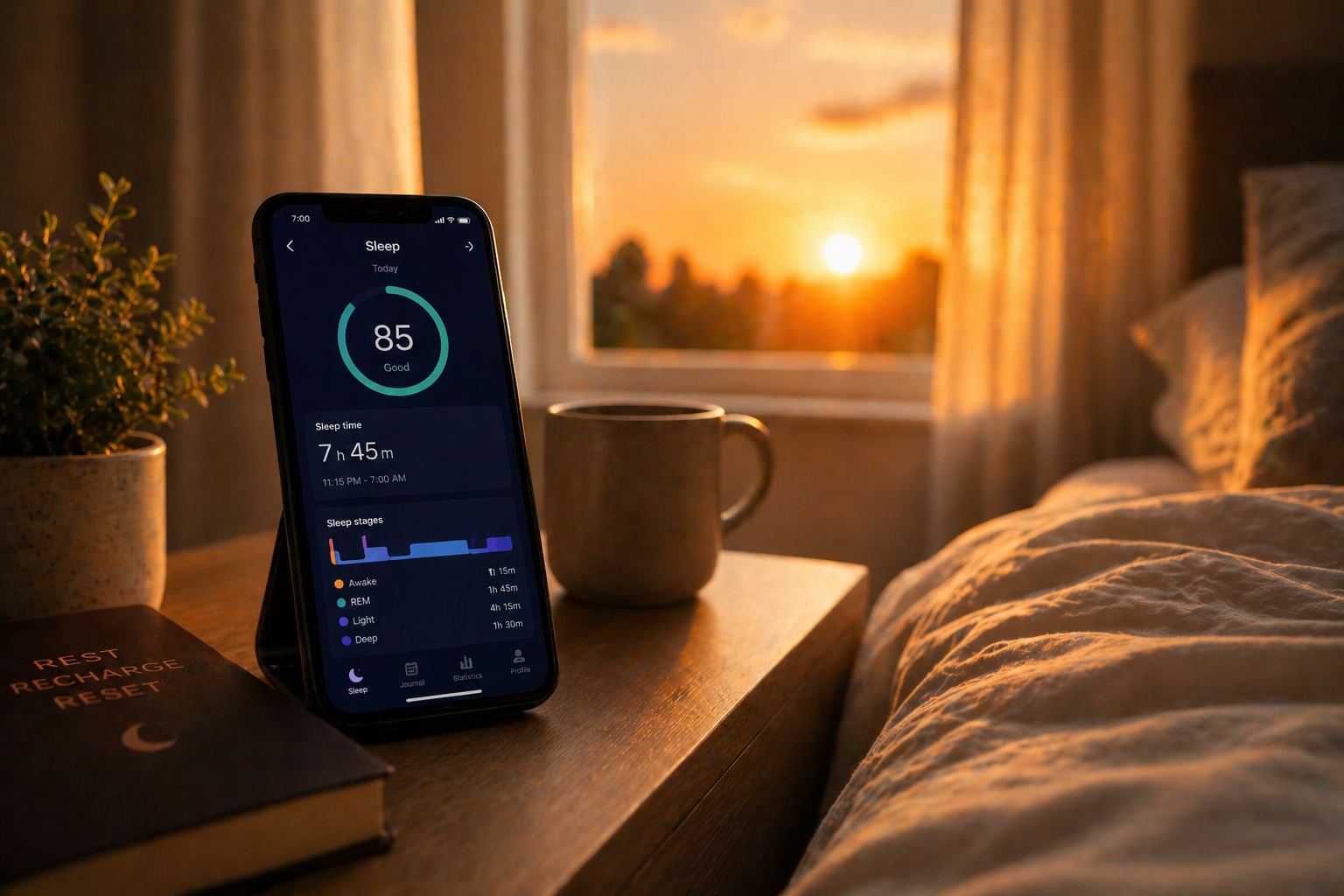
This article is for anyone using sleep apps but still waking up tired. You will learn what sleep apps do well, what they miss, and how to use them to support habits that truly improve sleep.
Key takeaways
- Sleep apps measure patterns, not causes or diagnoses
- Habits, not data, determine long term sleep quality
- Tracking becomes powerful only when paired with one clear behavior change
Sleep apps can feel like progress but leave you stuck
If you have tried several sleep apps and still feel exhausted, you are not alone. Many sleep apps are built to do one of three things. They help you fall asleep. They measure what happened overnight. Or they keep you engaged with scores and streaks.
Very few sleep apps change the root cause of your sleep problem in a way that holds up in real life.
For high performers, sleep apps can quietly become another scoreboard. You wake up to a low deep sleep number or a poor recovery score. It feels personal. Yet your app cannot see your work stress, late meeting, reflux, partner movement, or travel fatigue. It cannot run your day.
Sleep apps are not useless. Many are helpful. They work best as support tools, not as the solution.
In this article, sleep apps includes phone apps and the app layers connected to wearables such as Oura, WHOOP, Apple Watch, and Fitbit.
Sleep apps focus on metrics but your body runs on mechanisms
Before looking at numbers, it helps to understand how sleep works. Three core mechanisms drive sleep.
Sleep pressure builds the longer you are awake. It rises across the day and drops when you sleep. Late naps or sleeping in reduce pressure at night.
Circadian rhythm is your internal clock. It sets a window when sleep is easier and a window when alertness rises. Light exposure and consistent timing anchor this system. Laboratory research on light timing shows how powerful this signal is for shifting human circadian rhythms (Khalsa et al., 2003).
Arousal is the final gate. You can have high sleep pressure and good timing, but if your nervous system is activated, sleep becomes light or fragmented.
Most sleep apps emphasize the last 30 minutes before bed. In reality, many sleep problems are built earlier in the day.
Sleep is also the foundation of every health domain. It supports mood, focus, metabolic health, fitness adaptation, immune function, and long term brain health. That is why behavior change matters more than chasing perfect scores.
Most sleep apps treat symptoms, not causes
Sleep apps usually fall into three categories. Each solves a different problem.
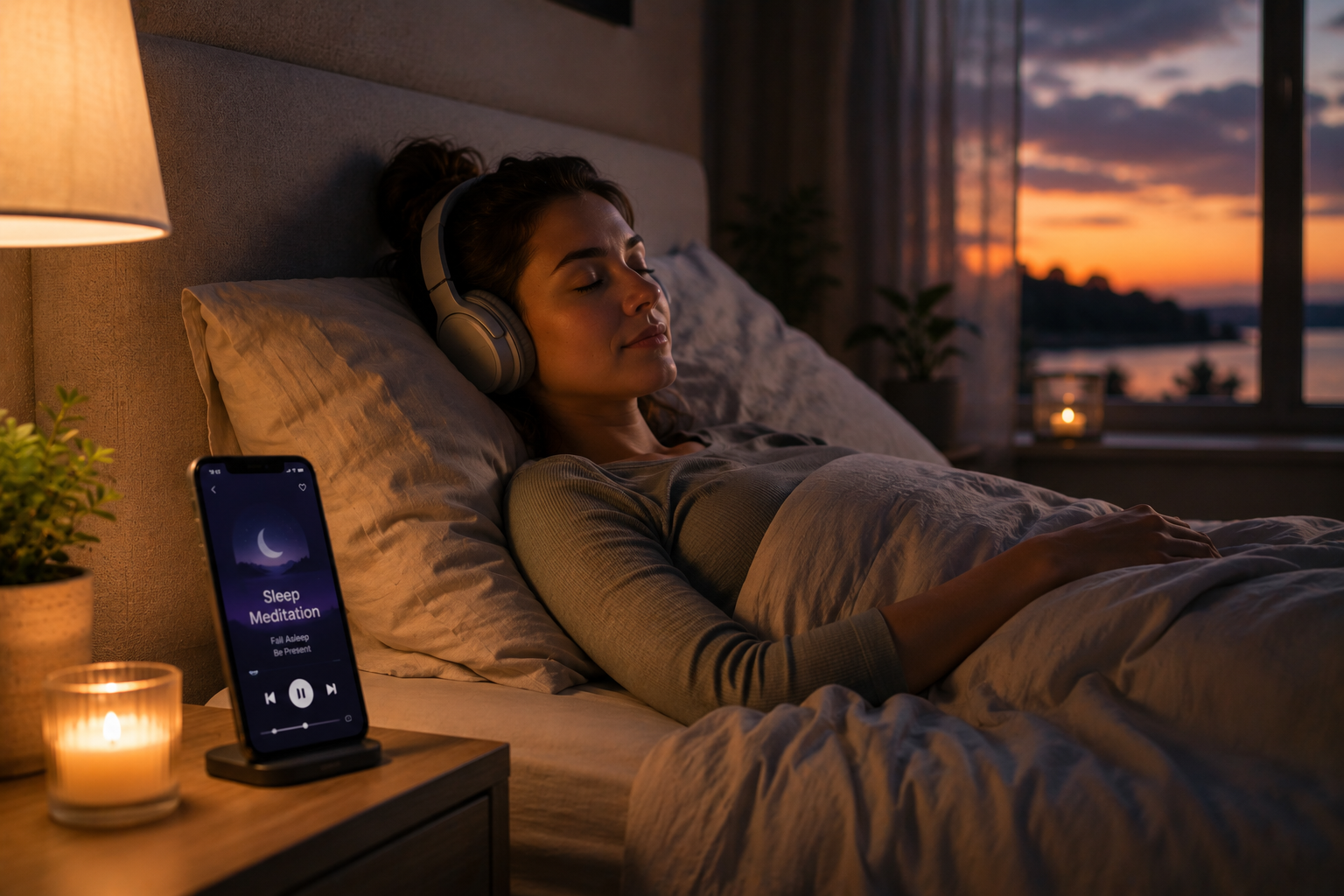
Sleep aids include meditation, sound, and breathing apps. These can lower arousal and make sleep onset easier. They are useful for a racing mind or travel. However, they rarely fix circadian misalignment or chronic conditioned insomnia.
If you want non app options, explore calming activities before bed for adults.
Sleep trackers such as Sleep Cycle, Oura, WHOOP, Apple Watch, and Fitbit estimate sleep stages from movement and heart related signals. They can reveal timing patterns or show that alcohol fragments your sleep.
They are not diagnostic tools. Consumer wearables do not measure brain waves. Validation reviews show stage accuracy is limited, especially for distinguishing light from deep sleep and wake from light sleep (de Zambotti et al., 2019).
Sleep protocols aim to change the behaviors that drive sleep. The strongest evidence base for chronic insomnia is Cognitive Behavioral Therapy for Insomnia, or CBT-I. A large meta analysis in the Annals of Internal Medicine found CBT-I improves sleep onset, wake after sleep onset, and total sleep time in chronic insomnia (Trauer et al., 2015).
A protocol is not a trick. It is a system. Habits, not willpower, determine sleep quality.
The myth sleep apps often reinforce: “My deep sleep is low”
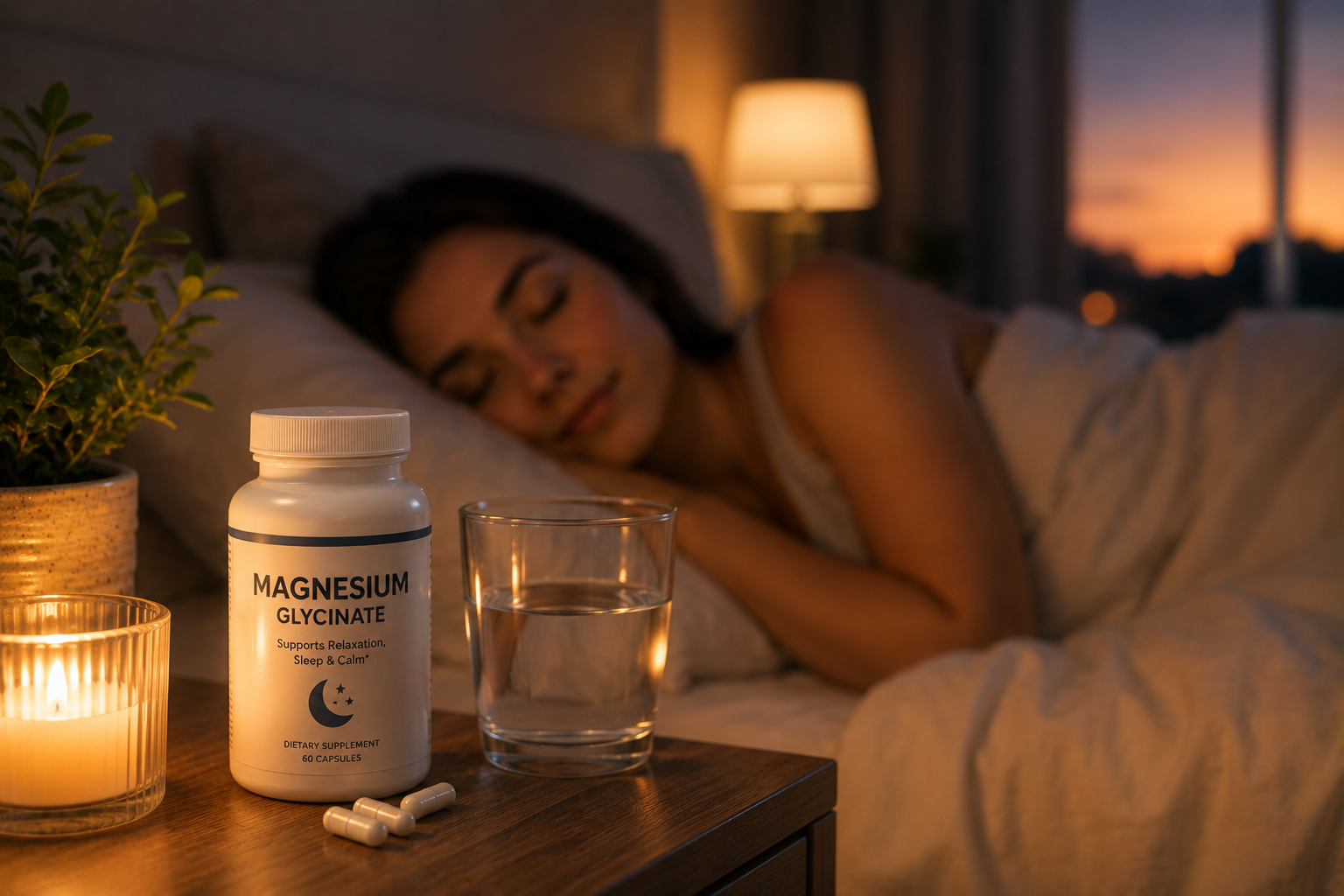
A common spiral starts here. Your wearable shows low deep sleep. You begin stacking solutions. Supplements, colder rooms, mouth tape, new routines.
Some of these may help. The myth is that deep sleep is a dial you can directly turn.
Deep sleep is influenced by behavior, but also by age, genetics, and prior sleep loss. Deep sleep declines across the lifespan even in healthy adults (Ohayon et al., 2004). You can improve sleep continuity and timing. You cannot force deep sleep on demand.
A better question is this. What is fragmenting my sleep or raising arousal?
If you want a grounded overview, see how to increase deep sleep naturally.
How to make sleep apps actually work for you
Sleep apps become powerful when paired with simple, repeatable habits. Tracking alone does not drive results. Behavior change does.
Keep a steady wake time
A consistent wake time stabilizes circadian rhythm and protects sleep pressure for the next night. Even a 30 to 60 minute swing can matter if it happens often.
If you want help identifying your window, read scientifically best time to sleep and wake up.
Use morning light as a real intervention
Bright outdoor light within the first hour of waking anchors your clock. Clinical circadian research shows that timed light exposure can shift human rhythms in predictable ways (Khalsa et al., 2003).
Aim for 5 to 15 minutes outside, longer on cloudy days. This is a timing signal, not a vitamin D strategy.
Protect the last hour without overcomplicating it
A calm hour lowers arousal and reduces light exposure. Choose two anchors you can repeat anywhere.
- Dim lights
- Warm shower
- Low stimulation reading
- Short breathing practice
- Simple written plan for tomorrow
A sleep meditation app can support this. The habit is what builds results.
Run alcohol as an experiment
Alcohol may shorten sleep onset but often fragments sleep later in the night. A review in Alcoholism: Clinical and Experimental Research found alcohol reduces REM early and increases awakenings as it is metabolized (Ebrahim et al., 2013).
Try a two week reduction and review trends in awakenings and resting heart rate. Let your data guide you.
The uncomfortable habit most people avoid
This one is simple and powerful.
If you are awake in bed for about 20 to 30 minutes, get up. Keep lights low. Do something quiet. Return only when sleepy.
This retrains the brain to associate bed with sleep instead of frustration. Conditioned arousal is a central target of CBT-I (Trauer et al., 2015). It can feel inefficient at first. Over time, it is often the pivot.
If early awakenings are common, see why do I keep waking up at 2am.
What sleep apps can and cannot tell you
Wearables provide trends. They do not provide diagnoses.
Sleep apps can help with:
- Sleep timing patterns
- Consistency tracking
- Large shifts in resting heart rate
- Clear behavior correlations such as alcohol or travel
Sleep apps cannot tell you:
- If you have sleep apnea or another disorder
- Exact sleep stages night to night
- The specific reason you woke up
If you have loud snoring, gasping, or strong daytime sleepiness, speak with a clinician. Formal diagnosis requires medical evaluation, often with polysomnography.
HRV is another metric often overinterpreted. It reflects autonomic balance but is shaped by illness, training load, alcohol, and hydration. A low HRV night is a signal. It is not a verdict.
What not to do with sleep apps
Avoid these common traps.
- Do not chase a perfect score every morning
- Do not change five variables at once
- Do not stay in bed for hours trying to force sleep
- Do not self diagnose from stage data
- Do not add supplements as your first move
Short sleep is defined as less than 7 hours per night in adults. Consensus guidelines link chronic short sleep with higher cardiometabolic risk (Watson et al., 2015). The solution is rarely a new gadget. It is a stable schedule and reduced arousal.
If you are unsure whether your baseline is realistic, read is 6 hours of sleep enough.
A simple 14 day plan using sleep apps wisely
Keep this practical.
- Choose one goal such as fewer awakenings
- Set a consistent wake time within a 60 minute window
- Get morning outdoor light
- Stop caffeine 8 to 10 hours before bed
- Create a repeatable 20 minute wind down
- Keep the bedroom dark, cool, and quiet
- Review sleep app data once per week
- If awake more than 20 to 30 minutes, get out of bed
If your environment needs work, start with how to make your bedroom good for sleep.
Where sleep science is still uncertain
Wearables are improving, yet sleep staging outside the lab remains imperfect. Accuracy varies by device, firmware, and population (de Zambotti et al., 2019). Even in sleep labs, people differ widely in how much deep and REM sleep they naturally get.
That nuance matters. Metrics are estimates. Mechanisms are real.
Use sleep apps as feedback. Use habits as the intervention. Progress, not perfection, is what your biology responds to.
If you want a personalized starting point, a complimentary assessment with a board certified sleep professional at Clementine can help you build a plan around your schedule and goals.
Sleep apps can support relaxation and reveal patterns. They rarely fix chronic insomnia on their own. Lasting improvement usually comes from consistent habits and structured approaches such as CBT-I.
Most sleep apps estimate sleep stages using movement and heart signals. Research reviews show they are reasonably good for sleep timing but less accurate for exact staging compared with laboratory polysomnography (de Zambotti et al., 2019).
Deep sleep naturally varies by age, genetics, and prior sleep loss. Wearable estimates can also be imprecise. Focus on trends and on habits that reduce awakenings and stabilize your schedule rather than chasing one night of data.
For most people, once per week works best. Weekly review helps you connect one behavior change to one outcome. Daily checking often increases stress without improving results.
GET IN TOUCH
Say goodnight to bad sleep
References
- de Zambotti, M., Cellini, N., Goldstone, A., Colrain, I. M., & Baker, F. C. (2019). Wearable sleep technology in clinical and research settings. Medicine & Science in Sports & Exercise, 51(7), 1538–1557.
- Ebrahim, I. O., Shapiro, C. M., Williams, A. J., & Fenwick, P. B. (2013). Alcohol and sleep I: Effects on normal sleep. Alcoholism: Clinical and Experimental Research, 37(4), 539–549.
- Khalsa, S. B. S., Jewett, M. E., Cajochen, C., & Czeisler, C. A. (2003). A phase response curve to single bright light pulses in human subjects. The Journal of Physiology, 549(3), 945–952.
- Ohayon, M. M., Carskadon, M. A., Guilleminault, C., & Vitiello, M. V. (2004). Meta-analysis of quantitative sleep parameters from childhood to old age in healthy individuals. Sleep, 27(7), 1255–1273.
- Trauer, J. M., Qian, M. Y., Doyle, J. S., Rajaratnam, S. M. W., & Cunnington, D. (2015). Cognitive behavioral therapy for chronic insomnia: A systematic review and meta-analysis. Annals of Internal Medicine, 163(3), 191–204.
- Watson, N. F., Badr, M. S., Belenky, G., et al. (2015). Recommended amount of sleep for a healthy adult: A joint consensus statement. Sleep, 38(6), 843–844.